
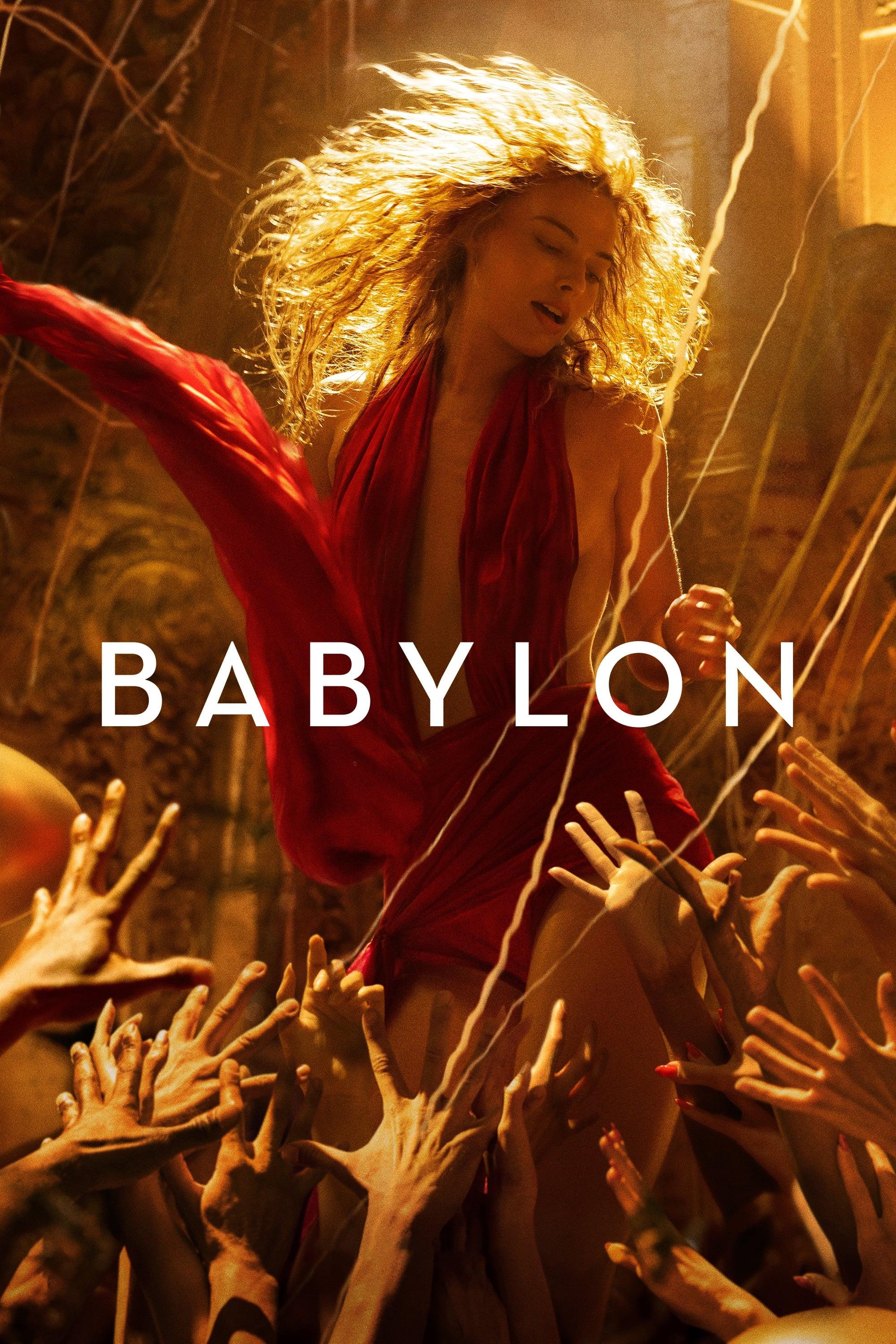
Damien Chazelle's Babylon (2022) is a love letter to silent cinema and the rise of talking pictures. The film is set against the backdrop of these Hollywood periods. Throughout the film, Chazelle subliminally references costume pictures in the silent era as well as pays homage to Alan Crosland's The Jazz Singer (1927), and most prominently, Stanley Donen's and Gene Kelly's Singin' in the Rain (1952). However, the film relies on these Hollywood classics to convey its narrative. Thus, descriptions such as "references" and "pays homage" that allude to Chazelle's fondness for Old Hollywood would be classed as an understatement. It would seem that there is more than one layer to the filmmakers' fondness for Singin' in the Rain, as the structure of Adolph Green's and Betty Comden's screenplay is used as a template for Chazelle's latest film. In addition, fundamental sequences are replicated from the classic Hollywood musical, such as the complex production process of a talking motion picture wherein Nelly LaRoy (portrayed by Margot Robbie) struggles to meet the sound recording requirements, which results in an uproar on set with multiple takes and a tragedy occurring.
In this case, what exactly has Chazelle offered us from his own personal vision? The answer is quite simple - not a lot. As a result, Babylon is an ambitious epic, failing to stand on its own two feet. It is supported by the richness of actors, motion picture nostalgia, and Justin Hurwitz's score. The film had the potential to be considered a 'classic' within Chazelle's filmography in years to come, through the ideological implications of the film's aesthetic, cast, score, locations, costumes, and production design. However, these filmic elements are not utilised proficiently, which prevented the picture from being a critical success. Instead, the film became overwhelming and inconsistent due to its shock value, lack of in-depth sequences and character development, as well as pacing. It can be argued that this mostly falls on the lacklustre script, for the most part at least.
Throughout his career, Chazelle has demonstrated to audiences and film critics that his expansive knowledge surrounding the art form of cinema translates on the page and on screen. The artistic creation of his prestigious musical La La Land (2016) not only showcased his screenwriting creativity and personal vision but also highlighted the development of his technical competence and film language. This progression is *somewhat* backed up in Babylon during the extravagant opening party sequence. However, unlike La La Land, the opening sequence in Babylon (although it predominantly contains cinematic excess) demonstrated Chazelle's uniqueness and potential as a filmmaker and storyteller. Yet, those spectacular moments were consistently relied on within the film, which made the film lack substance.
Thus, it feels as though Chazelle intended to shock the audience, rather than construct a motion picture that is grounded and layered. Now, it can be argued that the vulnerability and humanity of Manny Torres (played by Diego Calva) is the most grounded and interesting aspect of the film. This was, however, only true for the first hour of the film, as although his thirst to work in the industry was articulated naturally and authentically, it was not consistently conveyed in the script. In other words, when the film begins to spiral out of control, so does Manny's story arc. Although many aspects of the picture were cinematic, the film tried too hard to be something it wasn't by using scale, film history, and Hollywood stars to carry it. Although Chazelle desired to utilise character actors within Hollywood, the characters in Babylon were not completely developed, and the film relied on set pieces for its narrative structure.
Chazelle is one of the most prolific contemporary Hollywood filmmakers, as he keeps both feet on the ground and utilises his screenwriting ability and technical competence for grounded and intimate stories. Babylon is, therefore, at its best when symbolically using the silent and golden era of Hollywood to critique the current state of the film industry. This is executed through the use of the film's silent picture star, Jack Conrad (portrayed by Brad Pitt). Jack is a silent film actor who stars in costume pictures, but ultimately reaches the end of the road in his career. As the time has come for exciting actors to replace Jack and become the new leading studio men, Jack must accept that his stardom in costume pictures is over, and a new era of filmmaking is beginning. Chazelle comments on 'Costume Pictures' with the film to critique the costume and fantasy superhero movies that Hollywood prioritizes over cinema that has artistic integrity and makes a mark on the film industry. During the final sequence involving Manny watching Singin' in the Rain within a theatre in LA, Chazelle is informing the audience that films like these create dreams and change lives, as opposed to the event movies that are generating box office revenue. This sequence can be categorised as the best moment in the film, as it is sincere and grounded, while reaffirming that the Golden Age musical is used as a storytelling device for Chazelle's Babylon.